Saturday, October 09, 2010

Pinned down about sewing


I only know one person who sews clothes - and she lives across the country in California. My sister owns a sewing machine, but the only thing she sews anymore are curtain-type things or cushion covers. Nobody I work with sews. Every time I used to shop at a fabric store in Bangor, I wondered how they could stay afloat. People just don't sew anymore, I thought. One of these days all the fabric stores will close after the sewers like me die, and sewing clothes will become a quaint craft found only in history books.

I really felt in the minority until I discovered a web site where sewers review patterns and teach techniques and share photos of their current projects. From there, I linked into sewing blogs and other sites and all of a sudden I felt less an anachronism and more a person on the cutting edge (no pun intended). I think that's one great thing about the Internet - it has connected people who think erroneously that they are isolated in their interests or hobbies.

Of course, we all can find fellowship for our specific passions on the Internet. Apparently there are groups for people who can't get sexually aroused unless the blowing and popping of a latex balloon is involved. If I felt disconnected, just think how they feel. What are the odds of finding someone with the same emotional requirement in your own neighborhood?

But I digress, of course. When I discovered the sewing community online, I finally regained hope for home seamstresses (and the future of my local fabric store). There were actually young people who were excited by the idea of creating their own clothes, possibly energized by TV shows such as Project Runway.

I don't think they teach sewing in the schools anymore, at least not that I know of. When I was in school, every girl took at least one year of what was called Home Economics, which supposedly encompassed sewing, cooking, and learning things like what to look for in a really good piece of furniture. I enjoyed the sewing, learned nothing about cooking, and the only thing I remember about buying furniture is to look for dovetail joints. When I started Home Ec, I had already learned some basics of sewing from my mother, but not much. It took my teacher, Mrs. Ray, a tall, lanky woman who made all her own clothes, to lead me into the world of sewing. (Sorry, Mrs. Ray, I never became a good cook, but luckily, I compensated by marrying one.)

Back then, patterns were 25 or 50 cents (now they can be priced as much as $16 and more), fabric was cheap, and the clothing style in fashion was minimal, so sewing was the obvious way to go. When I got my first job, my supervisor was sewing all her own clothes, and she was such an inspiration to me. Decades later, when I asked her why she quit sewing, she said she had only sewn to save money, not for the pleasure of it, and when she could start buying clothes cheaper at Walmart than she could make them, she put away her sewing machine. That made me question my motives for sewing.

They are, I have decided, manifold. Certainly, part of it is saving money. Clothes can be outrageously priced these days, and it doesn't take much money to sew a short lined plaid wool skirt as compared to buying one for $80 (LL Bean's current catalog).

But it's more than that. It is fit. Very little read-to-wear fits me. I have a weird body, and I know I'm not alone. For one thing, I'm short, so have to have a petite sizing, and that's not always an available option in ready-to-wear. I'm studying hard these days, with the help of my online communities and some books, to master the art of adjusting patterns to fit me. It's an ongoing process.

But it's more than that. It is control. I don't have to go to Eddie Bauer's catalog and be restricted to 3 colors for a skirt I admire. I have the whole JoAnn fabric store (and online retailers as well) to choose from. I choose the pattern, I choose the fabric color and feel, and I choose everything from buttons to whether it has a shallow or deep hem. It's one of the few things I can control in this world!

And finally, it's even more than that. It is creativity. It is the pleasure of making something with my own hands, something unique, something useful yet lovely. This is the reason that outweighs the others, the reason there seems to be a growing community of (mainly) women who feel the need to express themselves in a new way. We may not be in the majority, but we are a dedicated bunch.

So today I am thankful for my friend, Sally, who inspired me to get back into sewing clothes after years of only making quilts (I'm still quilting, too - have two in the works). I'm thankful for the ordinary working women, housewives, mothers, and grandmothers who blog about sewing, who provide pictures of their creations for inspiration, who share their frustrations and, yes, their failures, and who take time to answer questions and teach new techniques. I may spend the rest of my life without someone locally who can sew with me, but a whole other world is as close as my computer, and I am still eager to learn. I like to think Mrs. Ray would be proud.

Friday, October 01, 2010

The Reuben Philosophy


I enjoy most foods, although I draw limits at things like escargot, eel, oysters, squid, and octopus. Then there are things that I could eat if I had to, but I just don't like. For instance, I detest rye bread, swiss cheese, and corned beef, and sauerkraut isn't my favorite either. A few years ago, however, I tasted a Reuben sandwich for the first time, and I immediately fell in love with it. Now tell me, how can I hate these four main Reuben ingredients individually, yet when you put them all together, my taste buds rejoice?! It just doesn't make sense, but I swear, it's true. Who knows why? Is it the addition of the thousand island dressing? Is it the grilled bread? Is it the chemical reaction of the various components? Who knows?

As I ate my half a Reuben sandwich last week in our hospital cafeteria, I again questioned how it could be possible that I can't stand the ingredients on their own, but could find so much pleasure in their combination. In reflecting, I started wondering if my Reuben paradox could be applied to life.

Would it be possible to take days where so much goes wrong and end up with a day that is saved in some way? Is it possible to endure the miserable things of life and come out with something to make you smile? To take experiences that, individually make you shudder and nevertheless combine them into days, weeks, months, and years that bring contentment?

My daughter believes that everything happens for a reason. I don't personally believe that, as my life experience runs more in the line of "crap happens for no reason," but I can compromise with her in this way: Regardless of why the crap happens, something good can always come out of it - whether it's a lesson learned, a new direction or calling in life, a new empathy for others who are suffering, a determination to improve, or even an opportunity for humility to take effect. It starts with the attitude that, although I might wish to change the circumstance, I will use it to my benefit in some way, and by gum, I'm not going to be beaten down and I refuse to surrender my power in the situation. I'm not willing just to tolerate the crap; it's actually going to make my life better!

Dealing with crap is one of the very definitions of life as a human. One thing is bad enough, but two, three, four things you hate descend upon you? Don't automatically give up. Start with a good attitude, embrace what you can't change, add some more ideas, try something new, and what you end up with might surprise you!

Friday, September 24, 2010

The 4th movement


Something remarkable happened to me this week. As I was driving to work (before sunrise), I was taken aback by the beauty of the bright gold harvest moon in the sky straight in front of me. A few seconds later, I turned on the radio to our local classical music station, and within a few notes I recognized the piece being played - the lovely Moonlight Sonata by Beethoven. That song holds precious memories for me, for its first movement was one of my favorite piano recital pieces as a teenager. Listening to the Moonlight Sonata while watching the gorgeous moon just seemed serendipitous.

For those of you who are non-musicians, the Moonlight Sonata is a piece played solely on the piano and consists of 3 movements, or parts. The first movement has always been relaxing to me, even though, in its minor key, some folks find it a bit sad. It has a wonderfully soothing rhythm that is steady, varies little in volume or style - almost like a lullaby. As I kept driving, watching the moon, and listening to the first movement, the moon was stable in the sky and stayed in front of me, bright and clear.

Then the second movement started, and immediately the moon became playful with me, following the cues of the music. It appeared on the left, then it appeared on the right, then just around the bend, it was on the left again. The music of the second part of Moonlight Sonata picks up the tempo, frolicking a bit and bringing in some changes. You're aware you've turned a page, something is different, and the quiet lullaby is over.

Then came the third movement. I remember that I tried valiantly several times to learn to play that third movement, but it was just too difficult. It starts at 90 miles an hour and never lets up, fingers flying everywhere on the keys, and oh, my, is it loud! Banging, clanging, pulsating, and just when you think it's over, it starts up again, going every which way. It makes your heart race just to listen to it. By this time in my commute, I had turned a different direction on a rural road thick with trees, and most of the time I lost sight of the moon totally.

Then all of a sudden, with a few loud chords, it was over. Silence. Beethoven chose not to balance his sonata with a nice quiet fourth movement after the noisy third movement. The frantic race is over, and there is no cool-down time.

Then it hit me: I'm living the Moonlight Sonata. My life started out as a lullaby, a familiar, secure feeling of love and acceptance, my wonderful childhood. The second movement started when I became an adolescent/teenager. Life became a little more complicated, still fun, but insecurities and changes made their debut, and the ubiquitous teenage worries about appearance, grades, and other self-esteem issues made that time a bit more stressful. The third movement, my adult years, came in with a bang, as I got married at 19 to an active alcoholic, started working, had two children, and tried to pay bills. Even when Ed got sober, things didn't magically calm down, as he entered the ministry and it was another round of stress and changes which threw me for a loop. For the whole third movement of my life, I never was sure if I was banging on the low keys or slapping the high keys - life was everywhere at once, providing me with incredibly uplifting moments and other times hitting me in the face with anxiety and worry. Even after we moved to Maine, as the saying goes, "good" stress can be just as hard on you as "bad" stress. Both kids got married, grandchildren started coming, and we had a very difficult time selling our house, financially and emotionally. The third movement was the roller coaster of movements!

Then it occurred to me that I am now in the fourth movement of my life. My sonata didn't end with those loud chords when we finally downsized and moved to our little house in the country. It just started a new part, a quieter, more peaceful part, and I am composing it every day by the choices I make. I am realizing that the more I choose to honor my priorities and fill my hours with meaning, the more harmonious the music becomes. If I react to situations with anger and frustration, the more dissonant the music becomes.

I've heard people talk about the idea that we write our own stories, the books of our lives. I think I prefer to say I'm writing my own sonata. It's got a lot of sad music, happy music, and everything in between. I'm in the fourth movement, and I'm not finished yet!

Friday, September 17, 2010

Just a few seconds

Every night I call my mom in Memphis and have a little chat. Our talk always includes a short summary of our police report. She enjoys this because usually, with our lower crime rate, our police reports are filled with various and sundry items of curiosities instead of murders. People in Maine will call the police for the most unusual reasons. For instance, there was a man a few years ago who called the police to report he was seeing holographic pictures of his nude wife on the side of his garage. (You have to wonder what he was smoking.) Recently there was a couple having sex on the dock, and in the same report, some condoms had been shoplifted. Wonder if there was a connection there. There are also reports of cows, chickens, pigs loose, and the town of Bucksport always has a "suspicious" person or two every week.

Today, however, the newspaper was full of depressing, not funny, news. There were 3 car accidents involving fatalities, one even wiping out a family (dad, mother, 4-year-old daughter). Sometimes the results of excessive speed, sometimes with DUI, but ultimately most of the accidents we read about (including the tragic one this week of the family above) happen because a driver crossed the centerline. All it takes is a few seconds, and your whole life is changed (or even eliminated). It might not even be the person who makes the mistake who is killed; many times innocent people are victims.

I have been grieving for that family (the mother worked at our hospital, although I did not know her). A few seconds of distraction, whether it's texting or turning the head to look at something or trying to kill a wasp in the car or answering the cell phone or changing the radio station or being blinded by the sun - and lives are gone, just like that, in an instant.

I immediately talked to my adult kids and reminded them to stay away from that centerline and to watch oncoming traffic that appears close to the centerline.

But it doesn't have to a life and death situation for a few seconds to alter your life. It only takes a few seconds to say something hurtful that immediately you wish you never said, or to press "send" on that insulting e-mail before you have a chance to think it over, or even to put up that "funny" photo of yourself on Facebook that your future employer will see. Some decisions in life just don't get the rewind opportunity. You may have the ability to handle troubles, financial and otherwise, and you may be able to handle hurt and disappointment and fear, but regret burns itself into your soul and haunts you forever.

It only takes a few seconds.


Saturday, September 11, 2010

The Fair (and Wayne)


This time of year always makes me nostalgic for the Mid-South Fair. I lived all my childhood in Memphis, just blocks from the fair site, and going to the fair in September was one of the highlights of the year for my sister Joy and me. School would usually give us a holiday for the fair with reduced or free tickets, and we could hardly wait to start the walk to the fairgrounds.

Of course, in Memphis, even towards the end of September, it was usually very hot, but that didn't matter to us. As we got nearer the site, we could hear the sounds of the fair - and the smells. The first chore was walking past the farm animals, who were stationed in an arena with a roof but no walls and you had to pass them to get to the good stuff. You'd think, growing up city girls, we would have been fascinated with the animals, but that was not the case. The stink of mature and straw was just a minor inconvenience that we had to endure before we could get to the main attraction - the rides, of course!

Our funds were limited and our fear was infinite, so we stuck to our preferred time-tested relatively low-key favorite rides - ones that were cheap and not too scary - in other words, rides that stayed pretty close to the ground, like the bumper cars and scrambler. Dad took many home movies that showed how much fun we were having laughing and screaming. As a child, I was always fascinated by the Fun House, but that was more expensive to ride, scary in its own way, and it wasn't until I was an adult that I finally was brave enough to try it.

You can't have a fair without the food, though, and I was a sugar addict, so I bypassed the gyros and corn dogs and headed straight for the cotton candy. Our dad absolutely hated to pay for spun sugar. He knew it was bad for the teeth and considered it a total waste of money. But every year at the fair, he relented. Add to that an occasional snow cone, ice cream cone, and Coke, and I was in sugar heaven.

Forget those mysterious trailers with loudspeakers urging us to "see the Gorilla Man" or "feast your eyes upon the Half Human/Half Alligator Boy." We never got to partake of those opportunities. I did enjoy, though, seeing all the pictures of what was inside. Likewise, we didn't have the money to participate in the "win a stuffed animal" booths and other "games of skill," but it was fun walking by and seeing all the various ways you could empty your wallet quickly.

After we were exhausted from rides, or just wanted a break in some air conditioning, we would walk through the crafts building. This I could only appreciate when I was older, in high school. I was a seamstress by then, and I was really interested in the clothes and items that were sewn for all the fair contests. They all made me feel good - the ones with exquisite workmanship gave me inspiration, and the ones with shoddier workmanship made me feel better about my own skills in comparison.

The Mid-South Fair always had a star attraction giving concerts in the Coliseum. As these tickets were extra, of course, from fair admission, our family budget rarely allowed us to add this to the itinerary, but one memorable year, Joy and I got to see the Cowsills! Another year, though, was a real dud. The fair always fell around my birthday, and that year, for some reason, part of my birthday present was our parents giving us both tickets to the star of that year's fair - none other than Mr. Wayne Newton. Now Wayne back then was not the megastar he is today. He was not popular, not cool, and we didn't even like his music. There we were, two teenage girls, sitting in the audience watching Wayne's performance, wishing we were anywhere else. The audience was small, so Wayne didn't exactly have the biggest fan base at the time. To this day, I hope we kept our disappointment hidden from our parents, because it was a very sweet thing for them to do. Now I laugh when I read a ticket to go see Wayne Newton starts at $80 because he is in such demand.

As I grew up and became an adult, the rides no longer interested me. I still enjoyed the food and the fun of just walking around, but my child-like excitement had been replaced with being able to take our own small children to the fair, with the joy of watching them react to the sounds, smells, tastes, and atmosphere of one of my fondest childhood memories.

The children are grown with kids of their own now. I don't go to the fair anymore; Ed and I don't like to get in big crowds these days. But a whiff of cotton candy, a shot of a ferris wheel in a Monk TV episode, an odor of a hay-eating cow, or a picture of Wayne Newton as "The King of Las Vegas," and I am right back there in Memphis, Tennessee, enjoying the glorious, exhilarating, irreplaceable Mid-South Fair.

Friday, September 03, 2010

Markers


As I mentioned in July, we recently downsized and traded two cars for one (a Subaru). After about a week of driving the new car, I realized a major difference in it and my old Toyota: On the Toyota, the number right up top center on the speedometer was 60, and in the Subaru, the number in that same position in 80. As I drive mostly highway miles on my commute, I have always been used to seeing the arrow point straight up to 60; now if I go only by the arrow, I would be speeding at 80. I can't just look at the arrow for guidance anymore; I will have to watch the numbers until I get used to the new setup.

I have to continually remind myself the same lesson as I age. For many years, I have gotten relatively comfortable in my own skin. I have understood my limits and my capabilities. I knew how much weight I could lift, how flexible I could be, how fast and far I could walk. After a few years have gone by, though, as I've aged, the speedometer has changed. I'm so used to seeing the arrow at one point, and forget that a few more years on the calendar means trading in for a new, different speedometer, and the same rules no longer apply.

I think that's one of the hardest parts of aging. You get used to your body behaving and responding in a certain way, then one day it fails you. A joint will crunch painfully or your digestive system won't cooperate or your eyes aren't as sharp; even your hair won't behave like it used to. Yet, somehow we assume things will never change, and then when they inevitably do, we prefer to avoid reality and pretend everything is the same. After all, that arrow has been pointing straight up for a long time now; if it's still straight up, everything must be normal and familiar - in other words, nothing has changed. We may even panic. It can't have changed! How can we act/look so old when we still feel so young at heart? I've heard ER tales of baby boomers who were sedentary all week and then on the weekend, participated in a few too many basketball games or tennis matches, because, after all, that's what they used to be able to do, right? Well, their muscles or bones or heart or some other body part didn't think so. It can be disheartening when you realize your body and stamina have deteriorated. My husband Ed said he was totally deflated a few months ago when he caught a glimpse of his 63-year-old thin lower limbs in the mirror and thought, "Oh no! When did I get my Daddy's legs?!"

Alas, with aging, we know that change is inevitable. Just ask the billions of dollars we consumers spend on products which promise to turn back time. Experts tell us to embrace the change. I don't go that far; I think, however, realizing that change has occurred is paramount. You can't be driving 80 mph when you can only handle 60, and you need to be aware that the speedometer you have been used to seeing has shifted its landmarks. You can't assume things based on the past. Every day is a new day with new challenges, every birthday has more to teach us, and every year our bodies remind us that things, they are a'changin'.

Saturday, August 28, 2010

Dad time

Mom and Dad at home

Had he lived, my father would have been 95 years old next week. As I’ve mentioned before, he died when I was 25 and my sister was 23. Of course, I think about him a lot, but especially around his birthday, and I am filled with regret that I didn’t get a chance to learn about him more. You just take for granted that your loved ones will be around for a long time; after all, my great aunt Bessie and my maternal grandfather outlived my dad. But Dad, being the most interesting person that he was, left before I could pick his brain. When he died, my sister Joy and I were just coming into full adulthood ourselves, and though Joy did enjoy some time working with Dad on some genealogy research, we never did get to spend the quality adult time that kids crave with their parents, when parent and child can join as equals.

For those of you who still have loved ones or close family friends who are getting on in years, now is the time to “pick their brains.” Some people do this in a documentation form, either videotaping/audio taping an interview, or having the older person write down some of their thoughts. Some, of course, just sit down and talk.

If you’re lucky, the elderly person will want to talk. Some, like my mom, become kind of uncomfortable discussing much beyond relating what she had for dinner, what her weather is like, and so on. Occasionally, she will come up with a childhood story, but sometimes it’s like pulling teeth.

Here is a conversation I’d have with my dad today: Tell me some stories of when you were growing up. What kind of games did you play? What kind of books did you read? What was an average day like for you? How did you handle being an only child? What were your favorite and least favorite parts of school? What kind of courses did you take? Do you feel you made the right career choice? What are the most favorite and least favorite parts of your job? If you had been able to go to college, what would have been your concentration of study? How did you feel when you first became a parent unexpectedly after 12 years of marriage? You had 2 girls; did you ever wish for a boy too? What were your greatest fears and worries? What would you do over if you could? What is some wisdom you could share about marriage? How did you come into your faith? Are there parts of your belief system you question, or have curiosity about? What was daily life like during World War II? The Great Depression? How were you treated in the army when others learned you were a pacifist? What did you never learn or do that you wished you had? What is your greatest disappointment? Tell me more details and stories from the traveling you and Mom did before you had kids. What were the difficulties in having your elderly, sick mother living in our house when Joy and I were growing up? What are your ideas about death and heaven? What important ideas and values do you want to make sure to pass on to future generations? How does one best handle the aging process? Why do you consider yourself to have always been a “maverick?”

Through Joy’s ongoing genealogical research, we are still putting together bits and pieces of Dad’s life, but the deep, important things that made him the remarkable man he was are hard to ever discover now that he is gone. I believe it was Tennyson who wrote “Too late, too late, ye may not enter now.”

I certainly don’t want to end on a depressing note. I did have many wonderful, enlightening conversations with my dad, and he made us well aware of his ethical code, his basic understanding of what his role in life was, his call to serve God, his priorities, his social conscience, his willingness to speak up when others wouldn’t. What I wouldn’t give, though, for one last long, poignant conversation.

Thursday, August 19, 2010

Mortality

H! why should the spirit of mortal be proud?
Like a swift-fleeting meteor, a fast-flying cloud,
A flash of the lightning, a break of the wave,
Man passeth from life to his rest in the grave.

'Tis the wink of an eye, 'tis the draught of a breath,
From the blossom of health to the paleness of death,
From the gilded saloon to the bier and the shroud,--
Oh! why should the spirit of mortal be proud?

The above verses are the first and last stanzas of Abraham Lincoln's favorite poem (by William Knox). Abe has always been my hero, so in high school when I learned that this was his favorite, I made haste to get a copy and read it. Well, believe me, if you want to enjoy an uplifting poem, this is not it. A more moribund, ghastly, depressing group of words you would be hard pressed to find. If you're curious about the rest of poem, go here and read it - just don't make it a day you're already feeling low and stay away from any knives. Lincoln was known for being "melancholic," and if this is an indication of how he felt on a daily basis, poor man.

Despite all these statements, the poem is a true one. You know what they say - Death and Taxes. Death, the great equalizer, always coming for us and those we love.

I had an interesting dream the other night. In the dream, I was driving at night, and the only thing lit up on the dashboard was the little red arrow that points to the miles per hour. The numbers themselves were invisible, and I could see only the arrow. I remember in the dream feeling as if I were driving fast, but I couldn't tell exactly how fast. I studied the speedometer in panic, trying in vain to picture where those invisible numbers were in relation to the arrow. Was I going 40? 60? 80? 100 mph? Couldn't tell. With my foot firmly on the gas pedal, I was speeding to some unknown destination at some unknown speed in total darkness, save for that one brightly lit arrow - which was, after all, pretty useless without the other indicators.

I'm dependably a morbid person. I've blogged about death before, read books on death, talked about death, and I guess as I go through this second part of my life, I will continue to haunt me (forgive the pun). I realized last week that next month, I will be 56 years old, now closer to 60 than to 50. Wow!

As in my dream, I do feel as if I'm speeding through life, or at least my life is speeding. Even though my average day is relatively routine, I get time to relax, do some crafts, social networking online, etc., there is an underlying current of time rushing by, and that urgency never quite leaves me. How fast am I really going? How much time do I really have left?

I heard another poem on The Writer's Almanac radio show Sunday, oddly about the same subject. It is "Last Meal" by Bill Holm. "On death row you celebrate your last night with your last dinner..." The poet goes on to ask if you were in prison, what would be your last meal request? Then, the gut-wrenching question, "And how do you know, my friend, that you are not
eating your last meal at this very table now?" That's the kicker - we don't.

So many plans, so many interests and hobbies and so many things I want to accomplish - with virtually no guarantees except this very minute. It's a sobering thought. My first reaction is, as in my dream, all-out panic, pushing harder on that gas pedal, stay busier, overstuff my schedule to the max. My second reaction, though, is maybe, just maybe, if I can't tell how fast I'm going, I should just release my foot - ever so slightly at a time - off that gas pedal and slow down a bit.

It's true that time rushes on, days and nights seem to come closer and closer, we get older, and we still feel far from accomplishing all we set out to do in life. The only guarantee I can muster is that I promise you there will never be a time I can sit back and say, "OK, I'm ready to go, I've spent enough time with my family, I've made enough quilts, I've seen enough beauty, taken enough photographs, sewn all my fabric, and I've made enough music to satisfy me." Ain't gonna happen, no matter how fast I'm driving or how much anxiety and panic controls the speed. There will always be things left undone, better ways I could have spent my time, and mountains of regret staring me in the face. Reality can be hard to accept. I think it helps, though, to - every once in a while - ease up a little bit on that accelerator - and hope for an occasional dash of moonlight to help you get your bearings.


Saturday, August 07, 2010

Smarter than you think

Since January of this year, I have been privileged to be a part of a beta test group for Instant Text, the expander software we medical transcriptionists use at our hospital. (For you non-MTs, expander software is our major tool in transcription to increase production, accuracy, and lessen the wear and tear on our hands, wrists, and fingers). The Instant Text folks were working on their new version 7, and asked for beta volunteers. I had never beta tested anything before, and I loved using their software anyway, so I jumped at the chance.

What an experience! I had to check for bugs, typos, and incompatibility with our other software platforms, but I also got to offer suggestions and feedback! I got to say, "This works well but could be improved," or "I don't really use this feature, and I don't think it's really necessary." One of my suggestions was actually adopted - and I feel as a group we beta testers were taken seriously, given a voice, and performed a valuable service for the company (as well as ourselves), helping to design the product to be the absolute best product of its kind on the market.

What a concept, huh? Finding out what users want and need, discover how they use the product and how to design a product to meet their needs! Actually taking time to ask questions and listen to the responses! Testing for bugs and everything else that could go wrong BEFORE you put it on the market!

As soon as the beta was over, I had mixed feelings. I felt bereft that the testing was finished - but also, I felt I elated that I had been present during the labor and birth of a new software. I also thought a lot this week about other companies and other products on the market, and wondered how extensively they were tested in the real world. I thought about all the recalls I hear in the news every day and wonder if products were rushed to market to make money as fast as possible without adequate testing for possible problems. Even going further, forgetting testing for bugs and quality control and that sort of thing, how many products in our society are actually given input from real people who will use the product? For example, I can't really believe that our TV remote control was ever tested by ordinary people. Maybe you have a remote that is clear and easy to use, but ours certainly isn't. I realize my opinion is only that of one individual, but there are just some things I use which push me to say, "What the heck? Who designed this piece of crap?!!"

I was impressed that in the case of Instant Text, we spoke and they listened. There was give and take, back and forth, compromise, clarification, and if they couldn't implement something on our "wish list," they took the time to explain why. We were constantly in touch with the programmers, and they with us. We could read the opinions and ideas of the other beta testers and comment on those. We all used the software in our everyday jobs in every possible situation, and with our feedback, the engineers were constantly improving and honing each facet of the product.

I believe there are many of us out here - regular people - who are insightful, intelligent, resourceful, and creative, who in our jobs or business dealings or even primarily as consumers, become just worker ants - with a specific job to do, here's how it's done, no time for questions, no time for feedback, just fill your spot in the economy and do an adequate job and everything will be OK. We hear, "Just buy (or make) the product and deal with it. Trust us. We know best." Where is there room for "I have a better idea!"? Where is there space for "I think this could be made more user-friendly!"? Where is an area for creative minds to tell the upper echelon in the company, "I want to do my job as efficiently and accurately as possible, and here are my ideas for accomplishing that!"? The best person to give input on improvements and changes in any job situation is the very person who does the job on a daily basis. No, we are not experts, some of us don't have college degrees, we're not influential or powerful people in business, most of us haven't written a book or had a research paper published. But we are in the trenches, day in and day out. We know what works and what doesn't. We can anticipate problems. We are smart, and our ideas have value.

The folks at Instant Text listened to me for over half a year. I am so grateful for the opportunity to have been involved. Other corporations, designers, engineers, food producers, product manufacturers - are you paying attention?

Saturday, July 31, 2010

Ready to work?

I've blogged about this before, but sometimes we assume that simple automatically equals easy. This is not necessarily the case. Indeed, many times simplifying takes a lot of planning, work, and time.

For instance, moving from our giant house to our current small house was our first major simplification undertaking. Notwithstanding the anxiety and stress of selling one house, building another, and the actual process of moving, there was much work to do once we moved in - mainly, even after paring down, how on earth was I going to move my piano, 2 harps, quilting and sewing fabric, supplies, and books, computer with assorted office accessories, and exercise equipment, into this smaller space? How was I to organize it so that I could keep what I used frequently in appropriate places but still have reasonable access to necessary items I used less often?

Of course, paring down is when you ask the question, "Do I really need this?" That question is a beginning, but you have to be careful you don't handle the simplification process the same way the school systems usually do - "Oh, we need to get back to basics like reading, writing and arithmetic, and budget cut on art and music, because they aren't really necessary." On the contrary, I happen to think art and music are very necessary, and my creative hobbies are as necessary to my existence as the pots and pans in the kitchen. Other people might look at the "stuff" I have for music, sewing and quilting, and see excess. I see tools that enrich my life. Again, simplicity is different for everyone. So even after we pared down an abundance of unnecessary things, we still had a lot to fit into our small house. That took a lot of work to figure out and things can get crowded in here sometimes.

This month we finally accomplished what we had talked about for years but were too afraid to do - simplify two cars to one. Everyone is so used to having a car apiece these days (and most of the time, out of necessity, with couples having two jobs with two commutes) that it seems almost anxiety-provoking to go to one shared car. However, in our situation, Ed is retired and is around the house all day, whereas I have to commute to the hospital, and when I'm not working, we do everything and go everywhere together, that it seemed to us that having two cars (and their coexisting registration, excise tax, repairs and maintenance costs) was not required anymore.

It was after we traded in our two cars and bought a new one that anxiety set in for me. I immediately started considering every possible circumstance where one car would be restrictive. If Ed needs the car during the day, he will have to take me to work and pick me up. We wouldn't have a backup car in case something went wrong. We have to keep changing the seat position to accommodate each of us. What if Ed were chain sawing wood and had an accident? He wouldn't have a car to drive to the emergency room. What if I am at work and have an accident or acute illness? He wouldn't have a way to come be with me, as the car will already be at the hospital. It's the same as the "what if" syndrome one encounters when one is fixing to throw/give away an item - "What if I need this one day?" Nope, never easy.

I am also in the process of revamping my wardrobe, to pare down and buy/sew clothes that work in such a way I can get by with less. Should be easy, right? Sounds that way, but it's not. When you have fewer pieces of clothing, each piece has to step up to the plate and fulfill its responsibility on a higher level. Each piece has to conform with my list of requirements - it has to fit, be comfortable, go with most everything else, be a color I love, be a style I love, be a fabric I love, be flattering to my figure and coloring, be age-appropriate, be office-appropriate, be affordable, etc. Most of the time for me, by the time I consider something in ready-to-wear, it won't even pass the first requirement (fit), much less all the others. When I sew a piece, I can be more choosy about the fabric and colors and style, but every pattern needs a great deal of measuring and adjustment before I can even use it. Again, this seemingly uncomplicated process of simplifying my clothing has taken on a life of its own.

Although a real endeavor at simplification can result in contentment in the long run, the process itself is usually not easy. It can be stressful, time-consuming, and a lot of hard work. It involves introspection, thinking, brainstorming, searching through myriad choices, making hard decisions, flexibility, and organizational skills. You have to define your "needs" and "wants" and even before that, define and refine your definition of "needs." I think the whole attempt is like planting a garden. You spend a lot of time planning before you even plant the seeds, then you spend more precious time watering, weeding, pruning, and generally maintaining your project. Only you can decide if the effort is worth it for you. My personal experience says it is. Just remember, the whole process, though it is work, can have its own set of blessings, and once you finally simplify one area of your life, you'll probably find another one that needs attention, and you have to start the process all over again. It can be scary, but then, isn't life itself filled with leaps of faith - every time you make important decisions, such as whom to marry, whether to have kids, where to live, what job to take? Sometimes you just have to jump in there and try. You might be surprised at where simplification will lead you. In the meantime, be ready to sweat.

Friday, July 23, 2010

My new man


There's a new man in my life. He doesn't care if I'm thin or fat, he doesn't care if I have a bad hair day, he doesn't care if I have wrinkles or sagging skin or a face without makeup. He doesn't care that I can't cook, he doesn't care if I don't sing as well as I used to, he doesn't care if the quilt I made for him has crooked seams.

What does he care about? He cares about the fact that Ed and I raised our son Matt in such a way that he became a responsible, loving, compassionate adult. He cares about the fact that in time Matt took for his bride an equally responsible, loving, compassionate adult, and between the two of them, they will be the greatest parents ever. He cares about the fact that he will live in a safe and secure environment, where his physical and emotional and mental needs will be met. He cares that this family unit will prepare him through the years to be a responsible, loving, compassionate adult himself. One day he will look back, realize all this, and be so grateful.

And Ed and I, in the present, look forward to watching him grow and develop, awaiting his first laugh, first step, first everything. We are totally assured, as in the Allstate commercial, that he is "in good hands." My new man is starting life with the blessings of generations before him who have led to this moment, on both sides of his family, who have nurtured their children who in turn nurtured their children and paved the way for this new little (or maybe not so little!) human being, who, I know, will absorb like a tiny sponge all of this boundless love which surrounds him.

Welcome to the world, Joshua Edward James, 9 pounds 15 ounces. You are one lucky kid!

Love,
Grammy

Saturday, July 17, 2010

A Brand New Person

When we were teenagers, my sister and I were privileged to be able to usher on a regular basis at the Ellis Auditorium in Memphis. There we saw everything from the Metropolitan Opera to Bobby Sherman to Broadway Shows to symphony concerts and instrumentalists like pianist Van Cliburn and cellist Pablo Casals - all for free, of course. What a golden opportunity for cultural education! My sister and I owe unending gratitude to our dad for driving us downtown and picking us up, many times at midnight when he had to get up early for work the next day. He never complained, because he realized it was an experience for us that he could never have afforded to give us on his own.

Some of the Broadway shows were so enjoyable that I almost memorized the whole script. When you sit through 8 performances of a musical, you retain a lot. One of my favorites was "I Do! I Do!" with the incredible Mary Martin and Robert Preston. It's hard to believe, but the whole play consists of just those two actors, who at the beginning pose as two newlyweds, bright-eyed and naively optimistic about what marriage was going to be, and it takes us through their married lives, their fights, their midlife crises, their kids being born, and the most beautiful song near the end, where they look back over their marriage with fondness, singing the poignant duet "My Cup Overfloweth with Love."

Decades later, I still remember many of the lyrics, and one particular song has special meaning for me this week. It's called, "Love Isn't Everything," and it talks about the excitement of bringing home a new baby into the family. The father sings, "At one minute after 2 in the morning, 6 hours following my wife's confinement, early on the day of January 12, in room 22 of the new City Hospital....A BRAND NEW PERSON SUDDENLY WAS, WHO NEVER USED TO BE! He weighed 6 pounds and 14 ounces and we named him after me! A son! A son! A son!....." and of course, reality sets in and the mom sings the chorus, "Love isn't everything...It cannot buy the pills, or pay the doctor bills...Love cannot heat the house, or warm the baby's formula when he starts crying....Love isn't everything...It cannot buy a new supply of fresh dry diapers! Love keeps us on the run, but when it's said and done, love is what makes it kind of fun, kind of fun, kind of fun, kind of fun!" Later in the skit, Mary Martin has another baby, a girl this time, and Robert Preston continues the "reality" chorus, singing, "Love isn't everything...It cannot hire a nurse or fill an empty purse...Love cannot pay for milk or put the satin ruffles on her party dresses...It cannot sign the check for her piano lessons....Love keeps us on the run, but when it's said and done, love is what makes it kind of fun, kind of fun, kind of fun, kind of fun!" At the end of the song, they both sing together: "Love keeps you on the go, but when you're feeling low, love is what keeps you a'hummin', when all the bills keep a'comin', love is what makes it sorta fun!!!"

I've been singing that song all week, because on Tuesday morning, we will welcome by C-section our third grandchild, who is also our first male grandchild and our son's first child, and suddenly the world has changed for us, for the other set of grandparents, for aunt Rachel and uncle Chris, for uncles and aunts and great-aunts and great-uncles and cousins on both sides of the family, because there will be a new entry into the annals of human history. He will be Joshua Edward, born into a family chock full of love, and, of course, that's what "keeps you a'hummin when all the bills keep a'comin."

That's the experience of every couple starting a new family. So my message to our wonderful son and fantastic daughter-in-law is this: The love gets you through all the changes and anxiety and fears and additional expenses - and the feeling of holding your newborn baby, the "brand new person" who "suddenly was, who never used to be," is totally, utterly, completely worth it. Of course, they don't need to hear it from me. They'll find out for themselves on Tuesday morning. And Ed and I are so blessed to be able to share in their happiness.

I can't wait to see and hold you, precious Josh! Love, Grammy

Saturday, July 10, 2010

It's Today

“Your days are your life in miniature. As you live your hours, so you create your years. As you live your days, so you craft your life. What you do today is actually creating your future. The words you speak, the thoughts you think, the food you eat and the actions you take are defining your destiny - shaping who you are becoming and what your life will stand for. Small choices lead to giant consequences over time. There’s no such thing as an unimportant day.” - Experience Life Magazine July/August 2010.

We’ve all heard it - “You are what you eat.” The proteins, fat, carbs, minerals, vitamins, fiber, etc., are all “building blocks” for the body. Whether these blocks are constructed wisely and build a foundation for health, or whether these blocks are constructed haphazardly with inferior materials and result in disease, fatigue, and body system malfunctions is always our choice. Of course, the problem with those choices is that they have to be made every single day, several times a day. You can’t just make a decision to eat healthier once and for all and expect everything to be smooth sailing from there on out. It’s not some kind of decision like what college to attend or whether to have kids or not - something that’s a done deal, decision made, case closed. It keeps coming back and back, every meal, every bite. It’s a decision that has to be made, remade, over and over and over.

The quote above from an article in Experience Life Magazine was really thought-provoking for me, for it takes the adage “You are what you eat” and expands it to encompass every decision of how you spend every second of your entire life. We are not just physical beings, and while we are creating building blocks that affect our health, we are simultaneously creating building blocks that involve our spiritual selves, emotional selves, mental selves - basically the wholeness of our souls and bodies. Every choice we make contributes to the structures that we call ourselves and the lives we will end up with.

That’s not to say everything runs in a perfectly straight line and can never allow for mistakes. Thank goodness there are second chances, changes of heart, do-overs, and such. We can undo some of the damage our choices have done to us, our bodies and souls and relationships. But in the end, our decisions and experiences are part of the whole package. They can be improved upon and repaired, but they can never be deleted. Yesterday makes us who we are today, and today makes us who we will be tomorrow, and the cycle is always in motion.

Those who know me are aware that I have written my own obituary. I will be 56 in September and I realize that I have more of the sand on the bottom of the hourglass than at the top. The process of creating and updating one’s obituary results in mortality staring one in the face. Each time I think about my obituary, I have to reevaluate my life anew. What do I want the final portrait to be? What is my legacy? What good changes have I brought to the world? I’ve heard so many people say that we miss the Big Picture in life, but what makes up the Big Picture? The tiny small pixels. Small pixels that on their own look meaningless and unimportant, but when put together finally reveal the complete portrait of a life.

You may want to join me in adopting this motto that I have selected to start each remaining day in my still-evolving life: “Small choices lead to giant consequences over time. There’s no such thing as an unimportant day.”


Saturday, July 03, 2010

It could be worse

Most people who know me realize that one of my life mantras is the Serenity Prayer (asking help to change the things I can, the ability to accept the things I can’t change, and the wisdom to know the difference). I also subscribe to one of my mom’s favorites: “This too shall pass.” But there’s a third piece of mental health maintenance I repeat often: “Oh well, it could be worse (ICBW).”

ICBW seems to have the uncanny talent to apply to almost any situation, because I have never been or will I ever be poverty-stricken, 100% desolate, and without hope. As most of you are, I am usually in the middle somewhere. So yes, things can be worse. There’s always room to move in that direction.

I tried to take a nap today and got awakened by two phone calls. Frustrating, to be sure, but - one of those calls could have been from a loved one bearing tragic news. Instead, one was from a telemarketer and the other from my daughter, checking in. ICBW.

As a medical transcriptionist, I have my share of dreaded dictators - the ones who don’t know where the “pause” button is and sit in silence or throw around papers or type while they think, or the ones who “uh” and “er” and then mumble the rest of the way, costing me money. I had Dr. H-- (who does all these things) dictate something the other day. It was a 12-minute dictation. I sighed, then thought, “Well, it could be a 20-minute dictation.” I can even take it further. “Dr. H-- could have been covering the hospital all week; it could have been Dr. H-- along with another equally horrible dictator on the next dictation; it could have been Dr. H-- with a sore throat and sinus blockage mumbling with an incoherent raspy voice and blowing his nose into the phone.” ICBW.

A friend told me he didn’t get as much raise as he thought he might, but at least he has a good job. ICBW. Our Jeep Liberty was stalling and gave out on the highway last week and had to go in for repairs. Ed was worried it was the tran$mi$$ion. But it was a minor problem with a bill of $81. Whew! ICBW. We had our debit card number stolen this week and had several fraudulent charges made to our checking account. They totaled $121. That’s bad, but the alternative? I’d just gotten paid and they could have wiped us out before I even was aware of it. ICBW.

Some people may find this approach of deliberately bringing to mind unpleasant scenarios depressing, but I find it uplifting. Because it is always a true statement, my rational mind has to acknowledge that I am in a better place than it might originally seem. It’s just one of those little ways to encourage gratitude and a sigh of relief, rather than resulting in my wallowing in self-pity and anxiety.

As you can see, this blog post is relatively short for me. It totals 564 words and is quite benign in nature. It could have totaled 1200 words and could have discussed in excruciatingly sickening detail an assertion I found on the Internet today that the dairy industry realizes there is a problem with pus in cow’s milk. See? ICBW.

Friday, June 25, 2010

Now show me yours

Yesterday we met our daughter and her family at an ice cream stand cum small playground. While the girls were enjoying their ice cream, Charlotte, 4, had to tell us about a recent minor accident where she had scraped her knee. Of course, being a kid, just telling us about it was not enough; she had to pull up her jeans to show us. There it was - her injury, nicely healing.

I wondered later why children love to show their boo-boos. No embarrassment, no hesitation. Maybe they’re just proud to be “survivors,” or maybe they just want sympathy. Whatever it is, most of us lose that desire to display weakness by the time we are adults. By then, we're told: Be Strong. Be Capable. Be Tough.

The few times we are required to show our weaknesses, we are encouraged to diminish their importance. I’ve read more than once that in a job interview, when the applicant is asked about her weaknesses, she should state them in such a way that they seem to be actually strengths, such as instead of “I work so much that I neglect family and other priorities in my life,” one should say, “I work too hard,” for after all, who doesn’t want to hire a hard worker? Instead of saying, “I’m such a perfectionist that I can’t even work in a team because, in my arrogance, nobody ever comes up my standards,” you just say, “I’m a perfectionist,” for after all, we need people with high standards, don’t we?

It’s OK to be weak, it’s OK to be injured or scarred. Lord knows, that’s what it means to be human. Of course, there are some people who are emotionally imbalanced and take it to an extreme, something termed emotional exhibitionism, where you bare your entire life and soul for anyone and everyone. But most people are very afraid of appearing vulnerable or defective - inadequate. Sometimes this reveals itself when you try to appear to know more than you do, or seeming to possess skills that you don’t actually have. I think the phrase, “I don’t know” has gotten a bad rap, for in many cases, it is the perfect response. From politicians to teachers, people are afraid that admitting lack of knowledge makes them seem weak. In my opinion, even experts had to have a learning curve at one time. Everyone is a beginner at one point. And if your fear of looking inadequate or vulnerable makes you avoid asking for help or requesting information that will help you learn, grow and expand, then you just dig yourself a deeper hole.

I'll admit it - I’m vulnerable. I’m a klutz and I am accident-prone. In a lot of things, I’m physically, emotionally, or mentally incapable of greatness. I’m moderately deficient in a lot of skills and knowledge, and wildly deficient in others. I’m willing to admit my weaknesses and imperfections, and will nod vigorously if it is suggested that I need improvement in many areas. Writing those sentences doesn’t make me feel weak or depressed. It actually gives me hope and some good reasons to get up in the morning and some desire to set goals. Life is growth, and if you’re really a seeding trying to make everyone think you’re a full-grown plant, it can get ridiculous. We’ve all got a lot of growing to do, and we’ll get many knee scrapes on the way. That doesn’t make us weak. It just means we’re moving.


Friday, June 11, 2010

Two syllables

I’ve had an opportunity to get back into sewing this week, and it gave me time to reminisce about my sewing experiences. I’ve come to the conclusion that in sewing, there are two 2-syllable phrases that have popped up intermittently on every project I have sewn.

The first is “OH NO!” Oh, yeah - fellow seamstresses, quilters, woodworkers, and various other crafters can attest to this. It’s the dreaded phrase, the one that sometimes is an unspoken, panicky thought, at other times a verbalized wailing expression of despair, and at other times a long, drawn-out sigh as a knot forms in the pit of the stomach. You know when it happens. It happens when you are clipping a seam and you clip just a little too far and your whole blouse is ruined. It happens when you are cutting out a pattern and you make a mistake and then you realize you have no extra fabric to redo it. It’s when you realize a second too late that the needle in the sewing machine is in such a position that it will ram the metal presser foot, break, and explode its dangerous pieces like shrapnel. It happens when you realize you bought the wrong zipper length or button width. It happens when you are in the middle of a project (usually with a looming deadline) and then discover you are out of interfacing, or a certain color thread, or some other absolutely necessary tool.

All these things have happened to me, of course, at one time or another. But times of frustration are not the only times the “OH NO!” is exclaimed in sewing. You have to remember a seamstress is working with dangerous tools - sharp things like needles and scissors and seam rippers (does the word “ripper” give you a clue?). For accident-prone folks like me, this can present a problem. It can even be bad enough that the poor unfortunate seamstress goes beyond a 2-syllable phrase and into a 4-letter word. I remember when I was sewing right along and got my finger caught under the sewing machine needle. The needle went halfway through my finger, bent, then came out at another part of the finger. Ouch! Then there was the time (the aforementioned needle hitting the presser foot at 90 miles an hour) that the needle tip broke off, flew up, hit me in the eyeball, then bounced back out. I had to go to the optometrist for that one. Of course, I’ve had the usual pin and needle pricks that drew blood, the razor-sharp scissors that clipped my skin, and the rotary cutter mishaps. (A rotary cutter is a pizza cutter for cloth. Don’t ask.)

In spite of the countless numbers of “OH NO!” experiences I have had in my sewing career, I must say they are balanced out by the other 2-syllable phrase - “AH HA!” (Yes, sewing is not all torment and frustration. You may have to rip out your stitches, but should never have to rip out your hair.) I adore the “AH HA!” experiences. An “AH HA!” always comes with a smile, maybe with a little slap on the forehead for being so dense. An “AH HA!” comes when you have been working for hours on an intricate item and something is awry. You can’t understand what. You followed the directions, you measured correctly, you did everything in the proper order, but for some reason, something is not right. If you are lucky, you are about to feel the “AH HA!” elation when the solution strikes like lightning. “Oh, now I get it!” And suddenly the air is sweeter, the sounds lovelier, the fatigue not so prominent, for you have figured something out. You became aware of what was causing a problem. You have unraveled the puzzling predicament to reveal the answer! It may be that, as luck would have it, your revelation comes in a minute or two. Or it may be that you go to bed confused and wake up with understanding. However long it takes, those “AH HA!” moments are exhilarating. (For MTs, this happens when you suddenly understand what a mumbling dictator is trying to say. It's a light bulb moment.)

Of course, you don’t have to sew to have the 2-syllable experiences. Life throws things at us all the time just to see how we deal with them. We have the “OH NO!” moments when we see a check on the bank statement that we forgot to write down, when our new haircut is too short, when we realize we forgot to pay a bill, when our car needs $1300 worth of work, when the toilet is leaking, when the electricity goes out, when the computer crashes, or when someone we just can’t stand wins an election. These probably happen to all of us.

The irony and pure joy of the thing is that sometimes you’ll have the dreaded “OH NO!” reaction and then you dive headfirst into your situation and after research or others’ help and advice or even prayer, you see the proper response, the answer, the best way to handle it, and it will be at this point that you are blessed with the “AH HA!” experience. And hopefully you have learned a way (in situations where you have some control), to avoid that problem in the future. Lesson learned, point taken. (Hmmm...I don’t much like that word, point.)

Now, that’s all for today. I’m headed back over to the sewing machine. I never learned the lesson of double-checking the needle position, but I did buy some safety glasses to wear just in case. Well, at least I learned something.


Thursday, June 03, 2010

I assure you I'm normal

I’ve heard that it is nearly impossible for a medical transcriptionist (MT) to type the word “plural” (word tense) because it always comes out “pleural” (having to do with the lungs). We just can’t help it. We type medical terminology all day long! It inevitably filters into our everyday lives and conversation. Sometimes we type the wrong word because we’re used to typing a similar medical word and our fingers just take over; other times, we type the wrong word because our expander automatically expands an abbreviation into a long, incorrect word or phrase. Whatever the reason, my husband seems to think I cannot separate myself from my job when it comes to written or oral communication.

Well, of course I can! Sure, I love my work and it is a major part of my existence, but I am a human being and I have a life outside of medical transcription. I can hold a “normal” conversation. Hmmph. He doesn’t think I could say or write much of anything that wouldn’t contain references to medical transcription, anatomy, pharmacology, or anything medically-related. Well, mister, I’ll just take that bet. There’s more to life than my job. I'm not some kind of nut who can't speak or write plain English. I am the most normal person you'd ever meet.

How normal am I, you ask? Well, here are some normal things about my life. I was born on Septic the 27th, which makes me a Libra. Libras are known for their desire to have everything peaceful - no phytes, no Battle signs, everything in fluid balance, and that describes me perfectly. Eye was born in Memphis, but am a transplant to Maine.

My family is normal, too. I have a sister who is really into genealogy. She has been going to cemeteries to look at old family Graves disease. My son nose everything about computers and all that digital stuff. He dose programming on web sites and works on a MAC anesthesia computer. (He also has a dog, Toby, a lab.) My daughter is a stay-at-home mom, but she is an expert in keeping kids safe in automotive crashes. She is an instructor for children’s cardiac seat classes. She doesn't have a dog, but does have a black CAT scan. My son-in-law and daughter-in-law are both teachers, so they have to interact all day with their pupils. My husband is a retired Pasteur. Make no bones about it, we’re all normal. I'm not pulling your leg. I’m sure this may come as a shock-wave lithotripsy to you, but I’m one of many perfectly normal people in my normal family.

We love living our normal life on the coast of Maine. We used to have a 2-car garage at our old big Victorian house, but now in our little home O2 we have to Parkinson in the driveway. But that’s OK. Down our road is a little pathology that leads to the ocean. Mainers love the ocean. They enjoy saline and digging muscles and finding a PERRL in an oyster occasionally. If you look out into the sea, you can sometimes see a navel ship pass by. Except for moving to Maine, I haven’t really traveled much. I’ve wanted to go to France for a lung time now (I took 21-French cystoscope in high school) but my mom is of Scottish descent, so visiting Glasgow coma score would be a treat, too. I definitely want to avoid Chorea - so much danger over there in that part of the world right now.

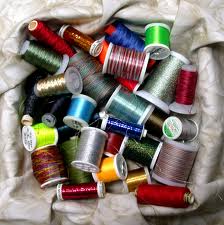
I also have normal hobbies. I don’t golf or bowel or anything like that, but I love to sew. My sewing room is in the same room as my home office, so I can sit here and look around at all my creative tools. I have a whole thread display on the wall in every color of the rainbow - Lymphazurin blue, yellow jaundice, red reflex, Lyme green, peau d’orange, white cells, gray matter - a beautiful soft palate, keeping all my creative gastric juices flowing. I store my bigeminal patterns in a nearby box so I can choose what dressing or skirt to make next. I’m pretty conservative treatment in my sewing choices when I sew clothes. I don’t follow all the latest fads in sterile fashions. With my window right beside effects my computer, as I listen to the sinus rhythm of the music on my iTunes, I can open the prep and drapes and look out my window pain and see nature in all her gory - trees, grass, rocks - and that’s just a tiny ejection fraction of all the stuff we have in our yard.

Sure, MT is fascinating, but I don’t let it rule my whole life. Of course, I am busy, with a lot on my platelet, and life still has its challenges. If I had a magic arthroscopic wand, I would T wave it and say “Abra cadaver” and everything would be perfect. But I’m content. I know there’s light at the end of the carpal tunnel. The days ahead are promising, and my suture looks bright.

See? I am completely normal. I wrist my case.


Friday, May 21, 2010

That's Life!


On November 7, 2005, I got up early and created a blog post. The picture that accompanied that post was a big question mark, and the title was "Who will it be?" Our daughter Rachel was in the hospital that day preparing for a repeat C-section to deliver our second grandchild. The new baby already had an older sister in the family, and we knew Caroline well, so we thought there would probably be similarities in whatever sibling joined the family. Only....that morning, we didn't know the gender or anything about what the new baby would look like. Rachel and her husband had chosen to be surprised, so, of course, we all were! We didn't know this information beforehand, but we did know the date and approximate time, since repeat C-sections are scheduled. Some things we knew; some things were a total surprise!

Now we're in the same ocean in a different boat. In this boat are our son and daughter-in-law, expecting their first child. However, this time, we know the gender - a boy - who will be named Joshua. We can even see in this ultrasound a pretty good preview of what he will look like! But....we don't know the date or time of labor or delivery, and we certainly don't have a sibling to wonder about similarities. Some things we know; some things will be a total surprise!

I have always said that life is never boring for me. Most people assume that is because I have so many hobbies - quilting, sewing, cross-stitching, singing, piano, harp, making greeting cards, photography, etc. Even my medical transcription career is usually challenging and exciting. But there is another reason I'm never bored - life itself. There are always surprises, one can never assume, and the very scenario you create for yourself frequently changes before your eyes - ultimately full of mystery and amazement. What wants to get up every morning and know exactly what the day will bring? A major hotel chain used to tout the fact that they had "no surprises." In other words, you could be assured that every time you stayed in that hotel, every room would be exactly the same, no matter where in the world you were. I guess to some, that was comfortable familiarity, but to me, that was not a selling point in their favor! Around the same time, fast food chains were making sure that one of their burgers in Arkansas tasted exactly the same as one of their burgers in Alaska. Again, familiarity, no surprises, but something in their favor? Not for me, thanks. I remember when my sister visited Maine a few years ago. We were planning to eat breakfast out, and there was a Denny's nearby, inexpensive and convenient, same everywhere. But she was adamant: "I didn't come all the way to Maine to eat at Denny's!" How true - so we ended up with delicious blueberry pancakes with real Maine maple syrup at a locally owned diner.

Of course, with surprises, there are always pleasant ones and unwelcome ones. As the old song says about love and marriage..."you can't have one without the other." In my experience, though, I firmly believe that I have had many, many, many more happy surprises and blessings than the other way around. I have fortunately had the wherewithal to deal with the setbacks as well as the ability to appreciate and enjoy life's unexpected enchanting moments.

At Caroline's recent 7th birthday party, her other grandmother was telling me a cute true story about surprises. A mother asked her little girl what she wanted to be when she grew up. The girl thought a minute, then said, "A doctor..." With this answer, the mother beamed. She thought how smart her kid was, how proud she would be of her chosen profession. Then in the next breath, the little girl, still deep in thought and unfinished in her reply, said, "....or a pumpkin."

Just when you think it's over, there's always something else to hear - or create, or manage, or learn, or reconsider, or work on, or be astonished by... Hey, that sounds familiar! That sounds like life! And in two months or so, a little baby named Joshua will be entering this crazy world and discovering what all the fuss is about. I can hardly wait!

Saturday, May 15, 2010

Guarantees

One of my coworkers was complaining last week that she needed yet another new set of tires, because her tires seemed to give out every 19,000 miles. She was bemoaning the inconvenience, the expense, and especially the problem of no guarantee on the particular tires she had been purchasing.

I buy products all the time that disillusion me. After I get one home and unpack it from its box or impenetrable plastic shrink wrap, I note in the accompanying brochure that there is a guarantee of ONE YEAR. Instead of being reassured, I am frustrated. One year? This product that the company is advertising as reliant, safe, exceptionally well made, is so bad that they can only guarantee that it will work for ONE YEAR? That's a guarantee? Sounds like a warning to me!

I've always been a guarantee-desiring person. Back in college, I wanted to join the show choir. However, you couldn't just join - you had to audition, the process of which was frightening to me. My professor, Dr. Fleming, director of show choir (I was a music major) asked me to try out. I told him I was too scared because I thought I wouldn't make it. He persisted and did everything in his power to persuade me to audition - everything, of course, except guarantee my acceptance, which would not have been an ethical move. My fear of failure, minuscule as it was, won the day, and I never did try out. Of course, today I can look back and realize that I am sure I would have been chosen, and I also realize my professor had the confidence that I wouldn't have a problem - but my fearful nature got the best of me.

Although I've done my share of stupid things in my life, I don't consider myself a huge risk-taker. Without a guarantee of safety and/or success, I just get intimidated. That is one of the most challenging life lessons I have had to learn. Life has no guarantees. You aren't guaranteed you're marrying the right person, aren't guaranteed your children will be healthy and intelligent, aren't guaranteed your pet will live a long life free from problems, aren't guaranteed you will always have your job, your house, or your health. You aren't guaranteed that if you perform in public, you won't mess up. You aren't guaranteed that your book you submit will be published (well, unless you're Stephen King, and then in the beginning he was rejected too). You aren't guaranteed a new diet will work or the new haircut will be what you envisioned. You aren't guaranteed that you'll see whales on a whale watch or moose on a drive through northern Maine. You aren't guaranteed that during the simplification process, that book or coat you are giving away is not something you may need a few months down the road. You aren't guaranteed that the dress you are sewing will look like the picture on the pattern. You can't even start a quilt and be guaranteed that all the seams will match up perfectly. (Well, on that latter one, you can pretty well be guaranteed that they won't match up perfectly.) Some of these things we have more control of than others, but despite our best efforts, there still is no guarantee of a favorable outcome.

The key to all this is to know that every choice in life has risks, some big, some small, and when the time comes that the end result is failure or humiliation or just frustrating inconvenience, we pick ourselves up and move on. Really, life would be boring if we had a guarantee of success in everything we attempted. At least that's what I keep saying to myself when things don't work out as planned.

Meanwhile, I thank Dr. Fleming for not guaranteeing me a spot in the show choir. Maybe it helped me grow up a little. I've had to spend the rest of my life working on my fears, and I know fear of failure has been a big one. That was a good first step to my realizing I had a problem.

Now on to my halfway-finished highly imperfect crib quilt I'm making for my grandson due to be born in July. The seams are not all ideally matched, but something tells me he really won't care.

Friday, May 07, 2010

It's all inside

How much is too much? How much is not enough? Was a man who has a net worth of 500 million dollars for some reason not satisfied when he reached 300 million dollars? How much is too much food? Too many clothes? Too much TV or computer time? Too many errors in a report? Too long a wait for an impossible dream? Too much sleep, or not enough? Too much job stress and not enough job satisfaction? Too much wasted time? Too many notes? (Mozart actually had criticism of his music!)

The thing about the "terrible toos" is that the answers have to be considered by individuals and generally not collectively. What may be sufficient food for one person 6 feet tall may be way too much food for me at a little over 5 feet.

Ed and I were talking about corporate and personal greed this morning. How do we monitor our needs and wants? How do we control our wants of "more" while we meet our needs? How would my life be different if I could have an abundance of the good habits and cut back on the bad ones? I mentioned seeing one of those inspirational signs to stick up on your mirror that said, "At this moment have everything I need." I said that sounded so calming to me. Ed was not so sure. He said, "That sounds all New Age and everything, but it's not necessarily true. Not in real life." I thought for a minute. Yes, I suppose he's right. Everyone has unmet needs, whether it's money to pay the oil bill or some other kind of need, maybe emotional, that is not being met. When you are dependent on circumstances or other people to meet your needs, there will always be holes.

However, the more I thought about that little sign, the more I decided there was truth in there. So in my head, I changed that little sign to read, "At this moment I have everything I need inside myself." That puts the emphasis not on outside forces, but on inside powers. Untapped oil reserves? How about untapped powers within each of us? It's the one thing we can control, and it's right here, right now.

As Dorothy found out, she had the power to leave Oz and go home at any time, but just didn't realize it, I have so much more potential already present in me that I just either am not aware of or try to ignore. Maybe it's the fact that with power comes responsibility, and we don't feel ready. It's like being handed a winning lottery ticket, thinking it's just a scrap piece of paper, or sitting on the treasure chest filled with gold, thinking it's just an old bench. The power cannot be accessed until we are aware of its existence.

One of my favorite shows is the reality TV show "The Biggest Loser." These contestants ostensibly use the competition to see who can lose the most weight, but the transformation that usually takes place is as psychological as it is physical. At some moment in the show, most of the players finally realize that they had this mental strength inside them all along, but didn't know it until they were forced beyond their "comfort zone" and challenged to do more and be more. "I didn't know I had it in me!"

So I have to daily remind myself that, yes, I have the energy inside me to do this hour of exercise, I have the skill inside me to transcribe this grueling report, I have the wisdom inside me to make this difficult decision, I have the courage inside me to respond to this challenge, I have the generosity inside me to sacrifice for the greater good, I have the determination inside me to get this task done, I have the patience inside me to be calm in the face of stress, I have the flexibility to adapt to change, I have the intelligence to learn this new software, I have the assurance inside me that I am ready for whatever the future holds, and I have the loving nature inside me that can forgive and move on. All I need to do is be conscious of the presence of these qualities, then reach in and grab them.

That's what introspection does. It's finding out how strong you really are inside, and acting accordingly. You can find the questions above anywhere, discussed on TV, in the newspaper, at the book club meeting or at the family dinner table. The questions are easy. It's the answers that are hard. But asking the questions is a good place to start. "I knew I had it in me!"